Loading...
Key takeaways
- Private label = proven chemistry under your brand: validated formulation, documentation included
- Two routes: bulk supply to your own filling line, or contract filling to finished goods
- Workshop-scale formats (5–20 L) are an underserved niche between aerosols and chemical majors
- Tuning (viscosity, targets, variants) locks into your recipe before volume commitment
- Qualify suppliers on composition disclosure, test reports, batch docs, tuning envelope, lead-time history
What private label means here
Private label is simple: our chemistry, your brand. You take a proven anticorrosion or dielectric formulation — with its published composition and documentation — and sell it under your own label, in your own packaging, to your own market. You skip the years and capital of developing and testing a formulation, and go to market with a product that already works.
Bulk supply vs contract filling
There are two routes:
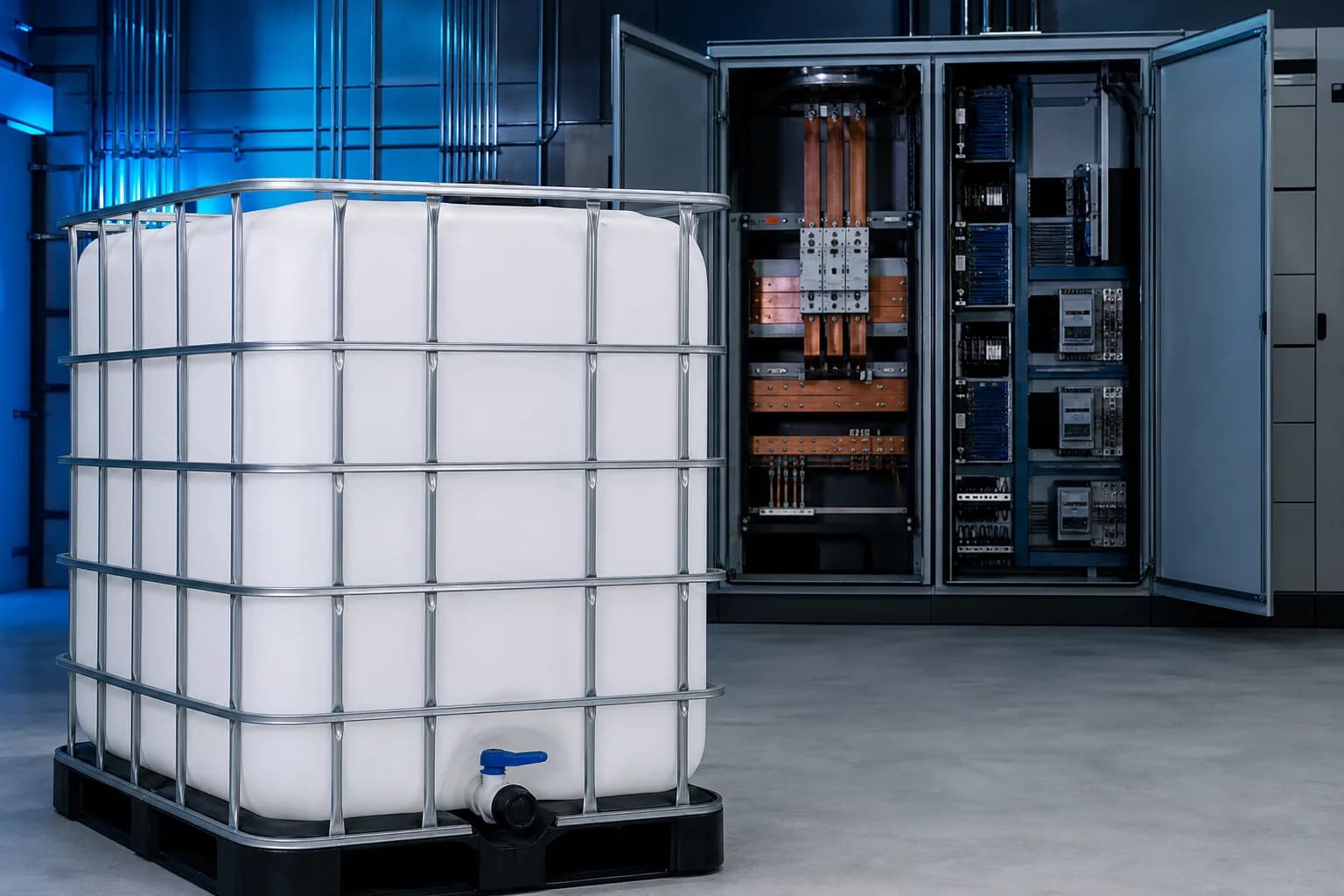
- Bulk supply — we ship the formulation as raw material in IBC totes and drums; you fill, brand and distribute in your own facility. Best when you already run filling and want maximum control.
- Contract filling — we supply the formulation filled into your specified format under your label. Best when you want a finished, branded product without operating a filling line.
Both start from the same raw material and the same published composition, so your product's performance is known and consistent from the first order.
What you get with the formulation
Every arrangement ships with the safety data sheet, composition sheet and REACH documentation your market and your customers will ask for. Because the composition is published, your technical and regulatory teams can qualify the product properly, and your customers can trust what they are buying.
Getting started
Tell us the formulation (anticorrosion, dielectric or both), your target format and annual volume, and your branding and documentation needs. We respond with a specification sheet, sample terms and bulk pricing, usually within two business days. Minimum quantities, packaging and Incoterms are confirmed in the quotation.
The economics: why brands buy chemistry instead of building it
Developing a corrosion-protection formulation from scratch means years of salt-spray iteration, dielectric certification, REACH registration and stability testing — a seven-figure runway before the first can reaches a shelf. Licensing proven chemistry inverts the model: the formulation arrives validated, documented and already produced at industrial scale, and the brand's capital goes where the brand actually competes — packaging, distribution, marketing. This is the standard structure across the lubricants industry; the store brands beside the famous names are very often the same class of chemistry from the same class of supplier, at a different margin.
What the supply chain looks like in practice
A private-label program runs on a simple rhythm. The brand approves the base formulation from samples and pilot batches, locks any tuning — viscosity for the local application habit, a scent-neutral variant, a market-specific salt-spray target — and signs an annual volume band. From there, totes or drums ship on a standing schedule to the brand's filler, or finished goods ship from contract filling. Batch documentation carries the brand's product name; composition disclosure stays consistent so the brand's own SDS obligations are straightforward. Reorders become logistics, not procurement projects.
Market positioning: where the white-label opportunity sits
The retail shelf for rust protection is crowded; the industrial shelf is not. Distributors serving fleets, farms, marinas and plants report demand for workshop-scale formats — 5 and 20 litre — that the aerosol brands do not serve and the chemical majors do not bother with. A regional brand that fills those formats from bulk supply owns a niche with real pull and thin competition. The same logic applies to specialised verticals: a marine-branded corrosion film, an electrical-trade dielectric protector. The chemistry underneath is ours; the market insight and the brand are entirely yours.
Qualifying a bulk supplier: the five questions
Ask for the published composition — refusal is a red flag you will meet again during your own compliance work. Ask for salt-spray and dielectric test reports traceable to a standard. Ask what batch documentation accompanies every shipment, and in which languages. Ask for the tuning envelope: what can be adjusted without re-qualification. And ask for a customer-referenced lead-time history, because your shelf commitments will live on it. A supplier who answers all five in writing is a partner; one who answers with adjectives is a reseller.
From first sample to first shelf: a realistic timeline
Brands consistently underestimate how fast a private-label launch can move when the chemistry is already validated — and how slow the non-chemistry parts are. The formulation side runs in weeks: sample evaluation, one pilot batch with tuning, recipe lock. The brand side owns the long poles: packaging design and compliance text, barcode and listing administration, and the first purchase order's cash cycle. A realistic end-to-end plan is one to two quarters, with the formulation supplier off the critical path after week six. Two structural choices decide most of the calendar. Bulk-supply-to-own-filler moves fastest if your filler is already tooled for your format. Contract filling adds our coordination but removes your capital risk. Either way, insist that the recipe lock happens on paper — signed specification, named test targets — before volume pricing, so the product on your shelf in year three is chemically identical to the pilot you approved in month one.
Two questions brands ask before starting
Who owns the recipe if we later change suppliers? The base formulation remains ours; your locked tuning parameters and your brand assets remain yours. What you carry away is the published composition and your validation data — which is precisely what lets you qualify an alternative source honestly, and what a closed-composition supplier denies you. We consider that portability a selling point, not a risk.
Can we start with contract filling and move to our own line later? That is the most common path. Contract filling proves the market without capital; once volume justifies a filling line, the same bulk supply feeds it with no change in chemistry or documentation. The transition is a logistics change, not a product change.
What the documentation transfer looks like in practice
Brand teams new to chemical products underestimate the paperwork leverage a raw-material supplier provides. Your product needs its own SDS authored in each market's language and format — but it is derived directly from our published composition and base SDS, which cuts authoring from a research project to a formatting exercise. Your compliance registrations reference our REACH dossier rather than starting from zero. Your quality manual's supplier-control section cites our ISO 9001 certificate and batch CoA regime. And when a large customer of yours audits their supply chain — which at industrial scale they will — the audit trail runs clean from your shelf back through your filler to a documented formulation with published chemistry. That auditability is a sales asset for your brand: it is precisely what the aerosol brands built on undisclosed formulations cannot offer their industrial accounts.
Terms that come up in every private-label negotiation
MOQ (minimum order quantity): for bulk supply, typically one 200 L drum; for contract filling, set by the filling line's batch size. Recipe lock: the signed specification freezing tuning parameters before volume pricing — your protection against drift. Composition disclosure: the published ingredient statement your own SDS and registrations build on. Territory question: whether the supplier limits your markets; our answer is that brand competition is your business and chemistry supply is ours. Tolling / contract filling: the supplier delivers finished, filled goods under your label. Walk into the first call with your target format, market and annual volume band, and the conversation starts at logistics rather than generalities.
The short version for a brand owner weighing the decision: the chemistry risk has already been retired by someone else's decade of testing, the documentation transfers instead of being authored from zero, and both supply routes scale from a first pilot to national distribution without changing the product. What remains is the part only you can do — knowing your market, your format and your shelf — which is exactly where a brand's capital and attention belong. Start with the sample and the wholesale conversation; the rest is sequencing.
Where to next
FAQ
What is the minimum order for private-label supply?+
One 1,000 L IBC tote of finished formulation, delivered ready for your own filling line. Formulation datasheets, UFI codes and CLP guidance are included.
How long does a private-label order take?+
Typically 2–3 weeks from order to loaded container, with batch tracing from tank to pallet under EU rules.
Can the formulation be customised for my brand?+
Within each line, yes — viscosity, temperature tolerance and packaging-compatible variants are tunable. The base chemistry stays the same, so existing validation transfers.
Where to next
PROCUREMENT
The Real Cost of Buying Corrosion Protection in Aerosol Cans
A fleet workshop treating 400 vehicles a year pays for packaging, propellant and retail ma…
ENGINEERING
Why Humidity Is Behind Most "Random" Electrical Failures
Intermittent faults, morning trips, connectors that fail only in autumn — the pattern behi…
PROCUREMENT
How to Read a Corrosion Inhibitor Spec Sheet
Base oil, additive fraction, salt-spray hours, film type. What the numbers on a corrosion …
Ready for tote scale?
Lab samples ship within a week — sealed bottle, CoA and test protocols included.