Loading...
FIELD PRACTICE
Where it's already deployed.
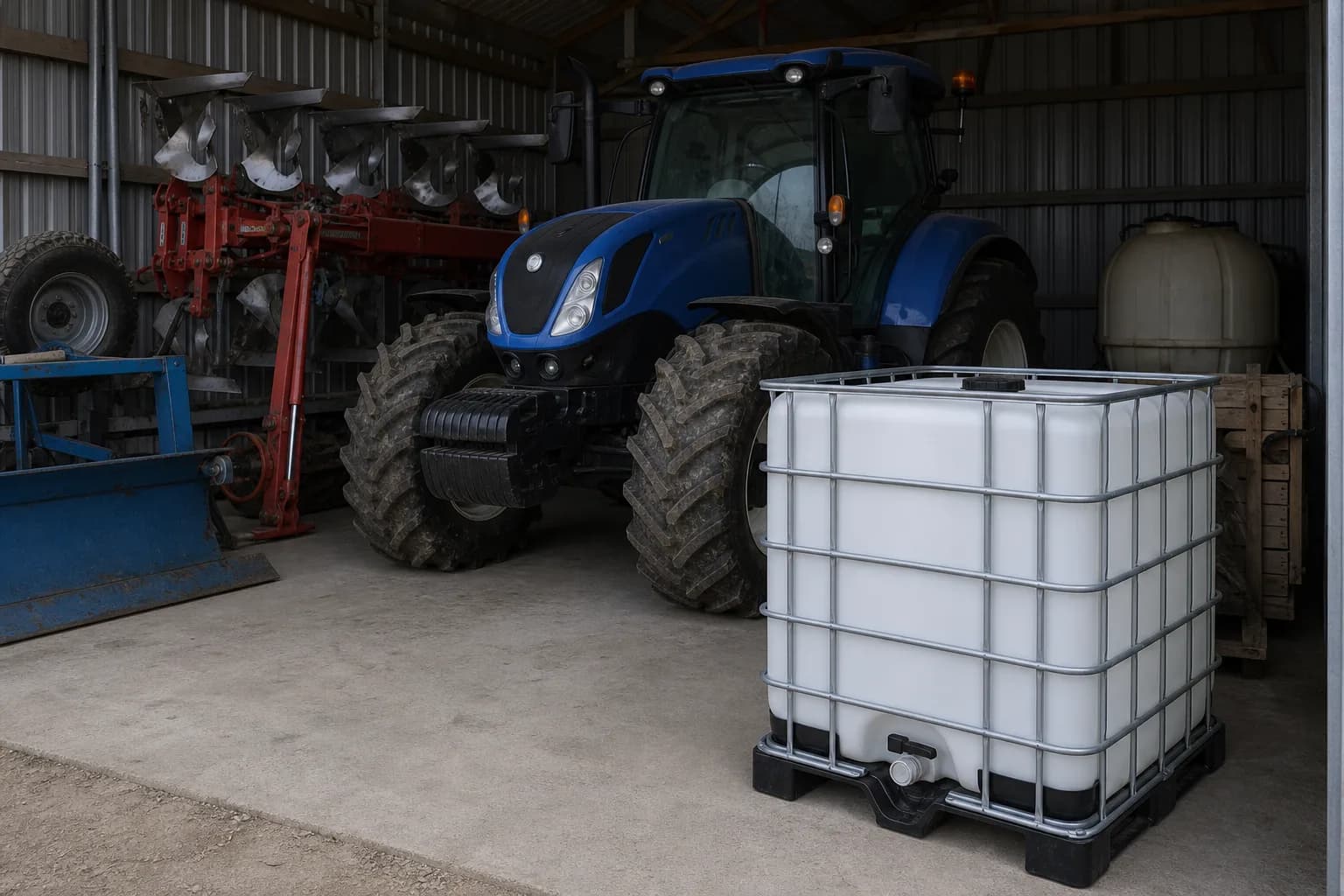
Cooperatives and dealer networks buy by the IBC and treat entire machine parks at a fraction of aerosol cost.
The autumn treatment round covers implements, cutting edges, hydraulic rods, chains and every bolt the season exposed; spring recommissioning then starts with working equipment instead of a seized-fastener backlog. Electrical protection matters as much: tractor connectors, GPS antenna feeds, irrigation control cabinets and grain-dryer sensors all live through condensation cycles that the dielectric film interrupts. Fertiliser proximity accelerates attack on everything nearby, which is why storage-shed treatment pays for itself first. Cooperatives increasingly buy by the tote and run shared treatment days across member farms — the format's economics work exactly like the machinery-ring model.
Dealers and machinery rings close the loop by offering pre-winter treatment as a service — the tote economics leave room for a healthy service margin while still undercutting what a farmer would spend on cans, and the spring-start reliability sells next year's slot by itself. Insurers and lease companies have started to notice as well, since a documented preservation routine measurably slows the depreciation curve on high-hour machinery, and residual value at trade-in is where a season of treatment quietly repays itself a second time.
✓Winter storage preservation of implements and machinery
✓Hydraulic rod and cutting edge protection
✓Tractor electrics and GPS connector treatment
✓Cooperative machine-park bulk treatment programs