Loading...
FIELD PRACTICE
Where it's already deployed.
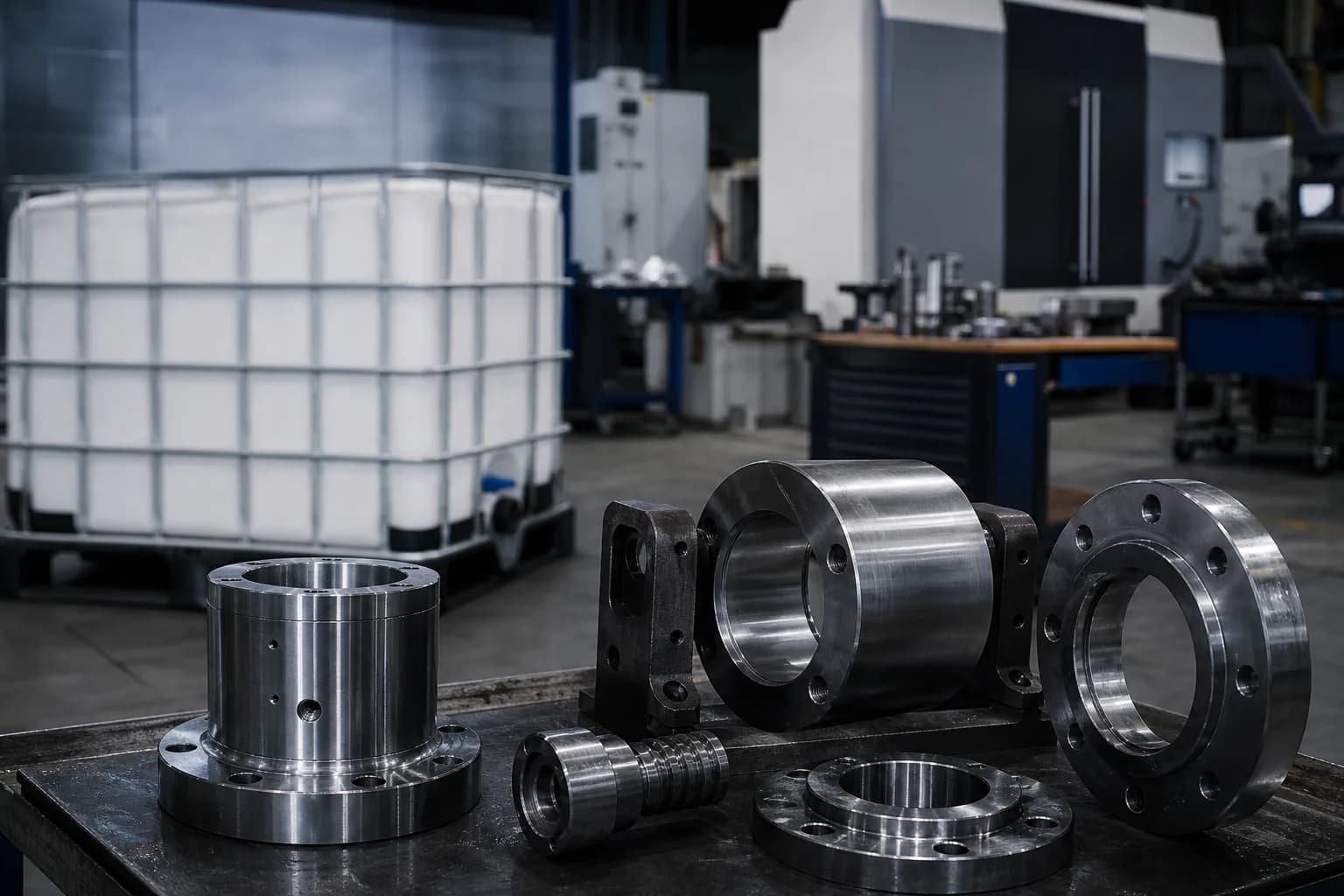
IBC supply integrates with dip tanks, spray lines and automated application — the formulation is the raw material your process consumes.
Machine shops fog or dip parts between operations so surfaces arrive at the next station clean instead of flash-rusted; export packers seal finished assemblies for six-to-twelve-month sea transits with documented salt-spray backing. Tooling and die preservation runs on the same chemistry — treated moulds return to service without the degreasing step hard waxes demand. On the electrical side, drive cabinets, sensors and automation I/O in washdown zones get the dielectric film against the humidity that trips production lines. Plants consume from a tote at the treatment bench, and quality teams get the composition disclosure and batch documents their supplier audits require.
Contract manufacturers add a commercial angle: offering treated-and-documented preservation as a line item on customer quotes turns a cost centre into billable scope, with the batch CoA and salt-spray documentation serving as the customer-facing evidence pack that procurement departments increasingly request in quotations before shortlisting a contract manufacturer. Process engineers value one more property in a production setting: because the film never cures, a part treated at the wrong moment is not scrap — it is wiped, re-run and treated again, which removes the rework risk that hard preservation waxes introduce on a busy line.
✓Interoperation flash-rust protection of machined parts
✓Tooling and die preservation
✓Export packaging corrosion protection
✓Automation cabinet and sensor moisture defence