Loading...
FIELD PRACTICE
Where it's already deployed.
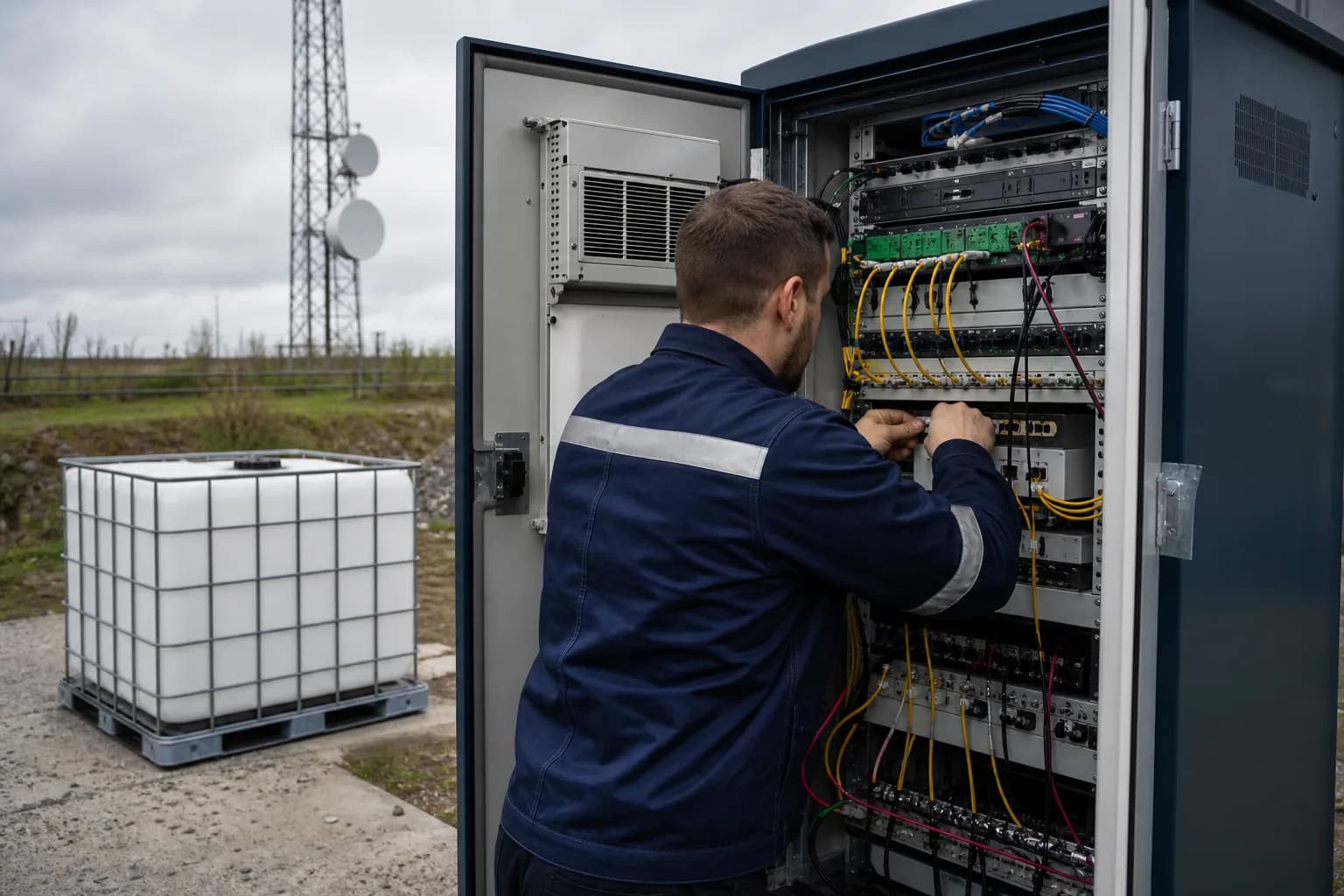
OEMs also specify it as a pre-shipment connector treatment and buy in bulk for production-line application.
Field-service teams treat outdoor telecom cabinets, base-station connectors and roadside enclosures in place, restoring leakage-degraded assemblies without board swaps; manufacturers apply the film at connector mating during assembly so products ship protected. The chemistry reaches what tropicalisation lacquers cannot — connector interiors, backplane pins, terminal strips — and stays re-enterable for service. Insulation-resistance recovery measured before and after treatment gives repair operations objective acceptance criteria. Volume consumers include telecom O&M contractors, marine-electronics services and repair depots that previously wrote off moisture-damaged boards now returned to service at component cost instead of replacement cost.
For OEM design teams, the film also answers a warranty question: field-failure analyses that trace to connector corrosion and humidity ingress convert directly into an assembly-line treatment step, and the per-unit cost at tote scale is measured in cents against warranty events measured in service calls, truck rolls and reputation — an asymmetry every warranty manager recognises immediately. Repair depots also report a workforce effect: a technician who can restore a moisture-degraded assembly with a measured before/after reading spends less time on diagnosis-by-substitution, which is the slowest and least satisfying part of electronics repair work.
✓Outdoor cabinet and base-station connector protection
✓Restoration of moisture-damaged field electronics
✓Pre-shipment OEM connector treatment
✓Production-line bulk application