Loading...
FIELD PRACTICE
Where it's already deployed.
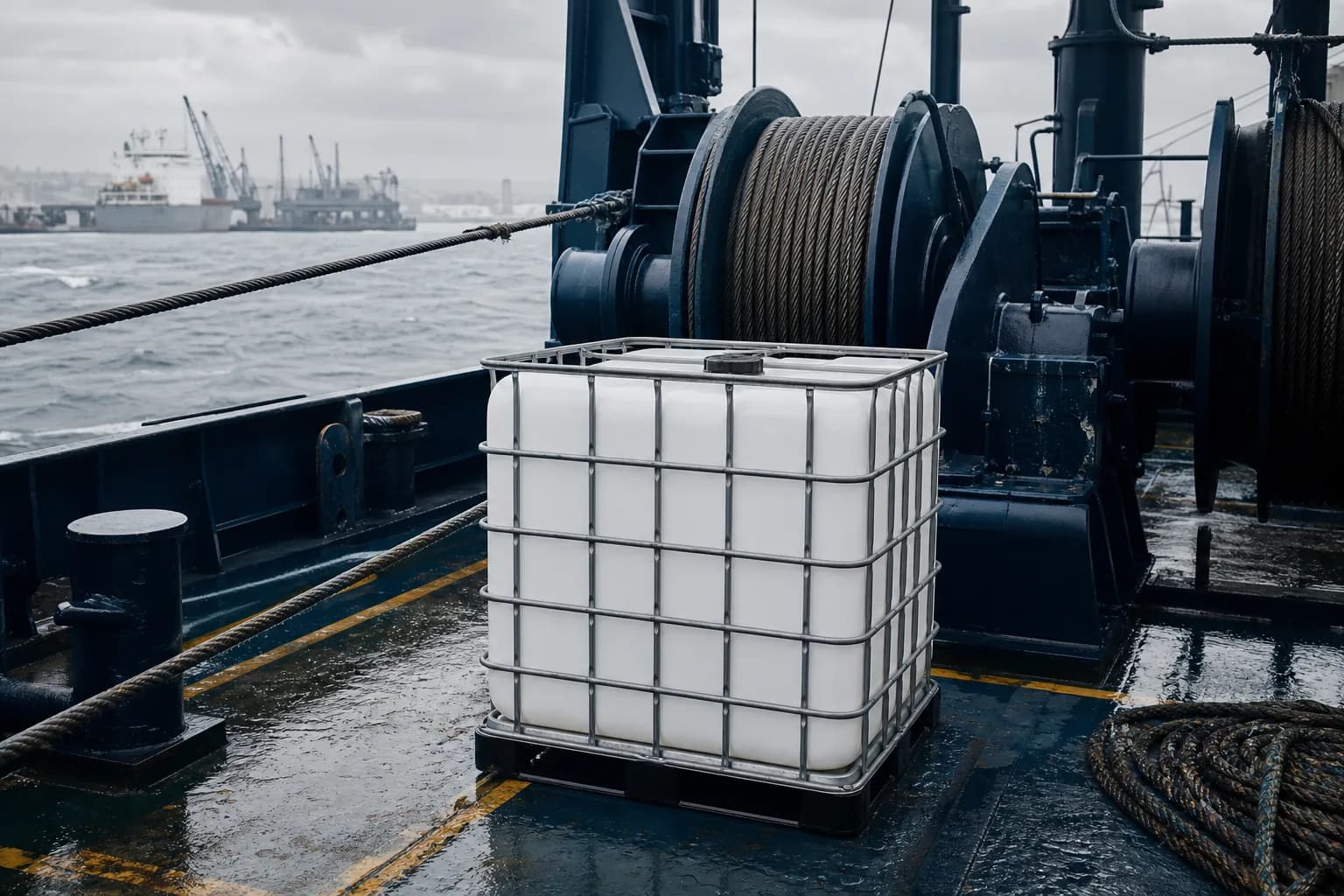
Both films survive repeated salt-spray exposure and stay elastic through temperature cycling — no re-coating between haul-outs.
Deck crews apply the film to wire ropes, winches, fairleads, hatch hardware and every fastener the spray reaches; engine-room teams treat junction boxes, pump motors and battery systems against the permanent humidity below deck. Lay-up preservation is the other pillar: vessels and rigs entering seasonal storage get a full exterior-hardware treatment that reverses cleanly at recommissioning — no cured coating to strip. Because chloride attack defeats stainless passive layers at sea, the displacement film matters even on 'corrosion-proof' specifications. Ferry, fishing and offshore operators run the treat-and-inspect calendar tote by tote, and validate first on their own deck hardware with the evaluation sample.
Ports and marinas run the same program at infrastructure scale: bollards, gangway hardware, crane fixings and pontoon connections all sit in the highest chloride-deposition band there is, and a scheduled displacement-film round costs a rounding error against replacing any single seized assembly — and the documentation pack satisfies the port authority's maintenance-evidence requirements at the same time. Class surveyors and port-state inspectors increasingly ask how deck-hardware corrosion is being managed rather than merely whether it has occurred, and a dated treatment log backed by batch documentation answers that question in one page instead of a defensive conversation.
✓Deck machinery and wire-rope protection
✓Lay-up preservation of vessels and rigs
✓Junction box and connector moisture defence
✓Battery system and pump motor treatment