Loading...
Key takeaways
- A 400 ml aerosol is ~25% propellant; you pay retail margin on the can, not the chemistry
- Per-vehicle treatment consumes 1.5–2.5 L — can-based supply collapses at fleet scale
- Bulk supply through standard spray equipment cuts material cost per square metre by 5–8×
- The crossover sits at a few dozen litres per year; above one drum, bulk always wins
- Same chemistry, published composition, SDS and REACH pack at every scale
The can is the product you didn't order
A 400 ml aerosol contains roughly 300 ml of active formulation — the rest is propellant. What you pay for at retail covers the can, the valve, the label, the propellant, retail logistics and several margin layers. The chemistry inside is a minority of the price.
The workshop arithmetic
Take a fleet workshop treating underbodies and electrics seasonally. Per vehicle, a thorough treatment consumes 1.5–2.5 litres of formulation. At aerosol prices, that is a stack of cans per vehicle — plus the labour of shaking, spraying, swapping and disposing of dozens of cans per day, and the waste-handling burden of pressurized containers.
The same treatment fed from a bulk container through a standard airless or compressed-air spray setup uses the identical chemistry with none of the packaging overhead. Operations that make the switch typically see the per-vehicle material cost fall by a large multiple — and application gets faster, because a spray line doesn't need shaking.
When cans still make sense
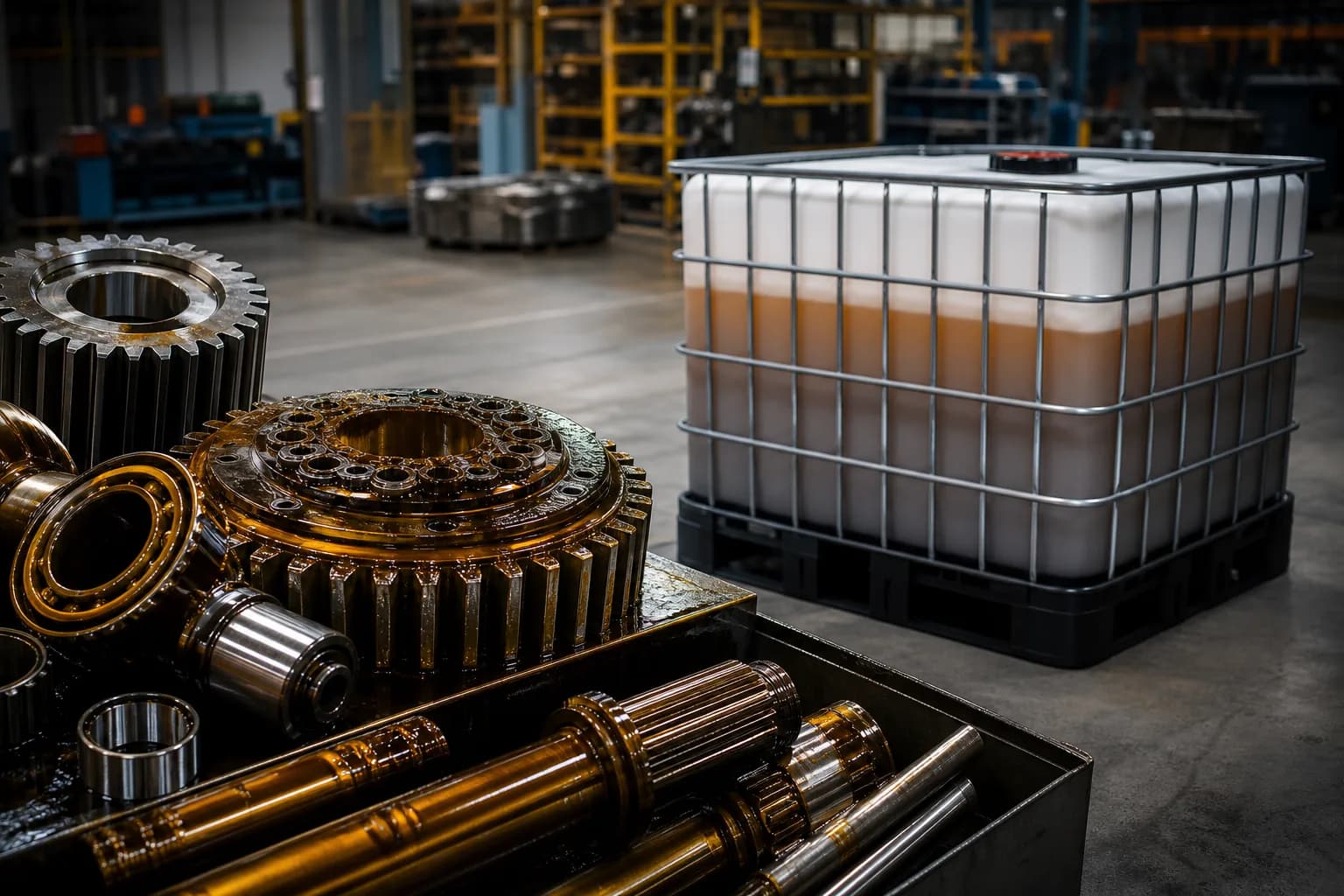
Aerosols win for portability and small, occasional jobs: a service van carrying one can for incidental use, a maintenance tech treating a single cabinet. If your annual consumption fits in a glovebox, keep buying cans. The crossover point arrives fast: at more than a few dozen litres per year, bulk supply in a 200 L drum already beats retail; at fleet or plant scale, the 1,000 L IBC tote is the only rational format.
What to check before switching
- Application equipment — standard spray, dip and fogging systems handle oil-based formulations; check seal compatibility (our formulations are harmless to common seal materials).
- Composition disclosure — bulk supply should come with a published composition and SDS, so your process and safety teams approve exactly what enters the workflow.
- Sample first — any serious supplier ships evaluation quantities before a tote order. Treat panels, expose them, compare against your current product.
We supply both of our formulations — anticorrosion and dielectric — exactly this way: sample, spec sheet, then drums or totes, shipped worldwide from the EU.
The rust inhibitor question: what the chemistry has to do
Aerosol marketing blurs three different jobs into one word. A rust converter reacts with existing oxide and turns it into a stable compound — useful on already-rusted steel, useless as prevention. A rust inhibitor interrupts the electrochemical reaction before it starts, either by filming over the metal or by passivating it. A penetrant creeps into seized joints but evaporates too fast to protect anything. Bulk buyers need to know which job they are purchasing, because per-litre pricing only compares within a category. Our anticorrosion formulation is a film-forming inhibitor: it displaces the water layer, bonds to the metal, and leaves an elastic barrier measured in salt-spray hours, not weeks.
Cost per protected square metre — the number that matters
Per-can and per-litre prices mislead because coverage varies with application method. A litre of formulation through an airless line covers eight to twelve square metres at protective film thickness; the same active volume from aerosol cans covers less, because propellant-driven atomisation oversprays and the thin retail film needs double passes. Work the arithmetic on your own fleet: surfaces per vehicle, vehicles per season, litres consumed. Operations that switch from cans to a 1,000 L tote typically report material cost per protected square metre falling by a factor of five to eight — before counting labour saved on shaking, swapping and disposing of pressurised cans.
Aluminium, stainless and mixed-metal fleets
Modern fleets are not mild steel. Truck bodies mix aluminium panels with steel frames; marine trailers pair galvanised chassis with stainless fittings. That mix invites galvanic corrosion wherever dissimilar metals touch through a salt-bearing water film, and it makes aluminum corrosion — the white, powdery oxide that seizes fasteners — a fleet problem, not just a marine one. A displacement film treats the whole assembly identically: it is chemically neutral to aluminium, steel, stainless, copper and zinc coatings, so one product covers the entire mixed-metal inventory instead of three specialised ones. That consolidation is itself a cost line: fewer SKUs, one SDS to manage, one application process to train.
When the switch pays for itself
The crossover is not subtle. Below a few dozen litres a year, cans win on convenience. Between that and a drum, a 200 L format already beats retail by a wide margin. At fleet scale — hundreds of vehicles, seasonal treatment cycles — the 1,000 L IBC is the only rational format, and the payback period on the application equipment is usually measured in weeks. Run the numbers, then request a sample and prove the chemistry on your own panels before committing.
Making the business case to your own finance team
The proposal that clears a CFO's desk is not about chemistry — it is about unit economics and risk. Present three numbers. First, current annual spend on cans, including the disposal fees on pressurised waste that most cost centres bury under general overhead. Second, the bulk-equivalent material cost from a real quote, at your realistic annual litres. Third, the application-labour delta: a spray line applies a vehicle's underbody treatment in minutes without the shake-spray-swap cycle. Add the compliance simplification — one SDS, one supplier audit, one storage class — and the proposal usually approves itself. Anchor it with the sample-first evaluation: no capital commitment until your own panels prove the film in your own environment. Finance teams do not resist change; they resist unquantified change.
Two questions fleets ask before switching
Does the bulk formulation behave differently from the aerosol version? The protective chemistry is the same class; what changes is control. A spray line lays a consistent, adjustable film thickness, where aerosol application varies with operator distance and can pressure. Most fleets find their bulk-applied film both more uniform and more economical, and validation on your own panels settles the question in weeks.
What equipment investment does the switch require? For underbody and cavity work, a standard airless or compressed-air rig with a tote tap — equipment most workshops already own or can add for the cost of a few months of can purchases. No heating, agitation or two-component metering is involved; the formulation is single-component and stable in the tote.
Waste, storage and the compliance ledger
The can economy carries costs that never appear on the purchase order. Pressurised containers are regulated waste in most jurisdictions: part-full cans need segregated collection, disposal contractors charge per unit, and every audit asks where they went. Storage rules for aerosols cap quantities per cabinet and per room, which at fleet scale means dedicated flammables storage that a non-pressurised tote simply does not require. And the procurement overhead is real — hundreds of small orders a year versus a handful of tote deliveries, each with one line item, one SDS revision to track, one supplier audit. Compliance officers tend to become the bulk switch's strongest internal advocates once they see the waste-stream arithmetic: a tote produces one empty, recyclable container per thousand litres, where cans produce a pallet of pressurised scrap for the same protected surface area.
Terms worth knowing when you request the quote
IBC (intermediate bulk container): the 1,000 L UN-certified composite tote on a CP3 pallet — the standard unit of bulk chemical logistics. Coverage rate: square metres protected per litre at a stated film thickness; the number that converts price-per-litre into price-per-asset. Film-forming inhibitor: chemistry that leaves a persistent protective barrier, as opposed to penetrants that evaporate. Standing schedule: a pre-agreed delivery calendar that replaces individual reorders — the mechanism that makes bulk supply operationally boring. Bring your annual litres estimate and your application method to the quote request, and the response can be a real per-litre price with freight, rather than a range.
Where to next
FAQ
How much cheaper is bulk IBC supply than aerosol cans?+
Per litre of active fluid, a 1,000 L IBC tote typically lands at a fraction of aerosol pricing — depots switching from cans report per-vehicle material costs falling by a factor of five or more, before counting the disappearing pressurised-waste stream.
What application equipment does bulk supply require?+
Standard industrial gear: an airless or pneumatic spray gun fed from the IBC valve, a dip tank, or a fogging rig. Both formulations are stable one-component fluids — no agitation, heating or two-part mixing.
Is there a minimum order for bulk supply?+
One 1,000 L IBC tote. Evaluation starts smaller: a evaluation sample ships with any quote so your team can validate on your own parts before committing to a tote.
Where to next
ENGINEERING
Why Humidity Is Behind Most "Random" Electrical Failures
Intermittent faults, morning trips, connectors that fail only in autumn — the pattern behi…
PROCUREMENT
How to Read a Corrosion Inhibitor Spec Sheet
Base oil, additive fraction, salt-spray hours, film type. What the numbers on a corrosion …
ENGINEERING
Salt, Humidity and Steel: Why Coastal Assets Corrode Faster
Chloride ions and constant moisture turn ordinary corrosion into an accelerated attack. Wh…
Ready for tote scale?
Lab samples ship within a week — sealed bottle, CoA and test protocols included.